

Telling time is one of the first practical skills you need in Spanish. You use it to make plans, catch trains, and complain that the meeting ran long. The system is simple once you learn two verbs forms, a handful of numbers, and a few set phrases. In this guide we'll cover how to ask for the time, how to give it, the regional differences you'll hear across the Spanish-speaking world, and how schedules use the 24-hour clock.
The question: ¿Qué hora es?
The standard way to ask for the time is:
¿Qué hora es? (What time is it?)
In some parts of Latin America you'll also hear the plural version:
¿Qué horas son? (What time is it?)
Both are understood everywhere. If you're asking a stranger on the street, it's polite to soften the question:
Perdona, ¿me dices la hora? (Excuse me, could you tell me the time?)
And this formula is also common:
Perdona, ¿tienes hora? (Excuse me, do you have the time?)
Or the formal version:
Disculpe, ¿tiene hora?
That last one, with tener, is very common in Spain. You're literally asking whether the person has the time, just as we do in English.
We all have phones now, so asking strangers on the street is not as common. Everyone "has the time" now.
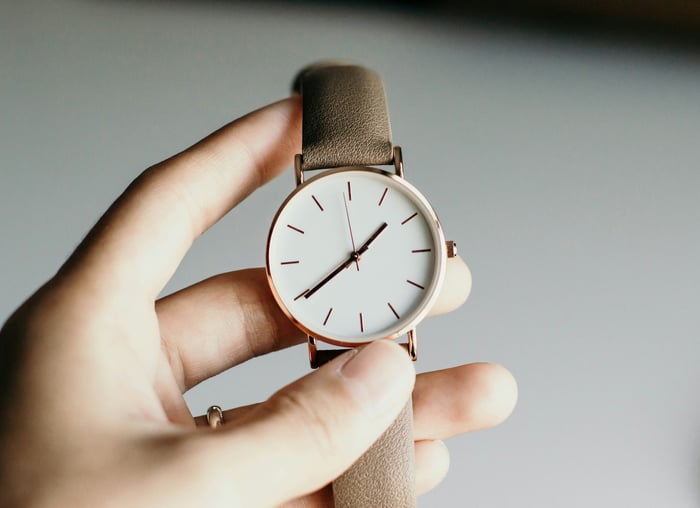
One o'clock is singular: es la una
To answer, we use the verb ser. There's one rule that trips up every beginner: one o'clock takes the singular, and every other hour takes the plural.
Es la una. (It's one o'clock.)
Son las cuatro. (It's four o'clock.)
Son las diez. (It's ten o'clock.)
Why the feminine article? Because the noun hora is feminine and it's understood: it's (the hour of) one. That article is not optional. We never say es una or son cuatro; it's always la una, las cuatro, las diez.
Adding minutes with y
The most universal formula works for any time on the clock: hour + y + minutes.
Son las seis y veinte. (It's six twenty.)
Es la una y veintisiete. (It's one twenty-seven.)
Son las once y cincuenta y ocho. (It's eleven fifty-eight.)
Notice that es la una keeps its singular verb even with minutes attached.
If you can count to fifty-nine, you can already tell any time in Spanish with this pattern.
Cuarto and media
For the quarter hours and the half hour, Spanish prefers two set words: cuarto (quarter) and media (half).
Son las ocho y cuarto. (It's eight fifteen.)
Es la una y media. (It's one thirty.)
Son las doce y media. (It's twelve thirty.)
You can always say y quince or y treinta instead. Native speakers use both, but y media and y cuarto are more common in informal speech, while quince and treinta sound more formal. A detective might use them in an interrogation room: ¿Dónde estaba usted a las siete y treinta?
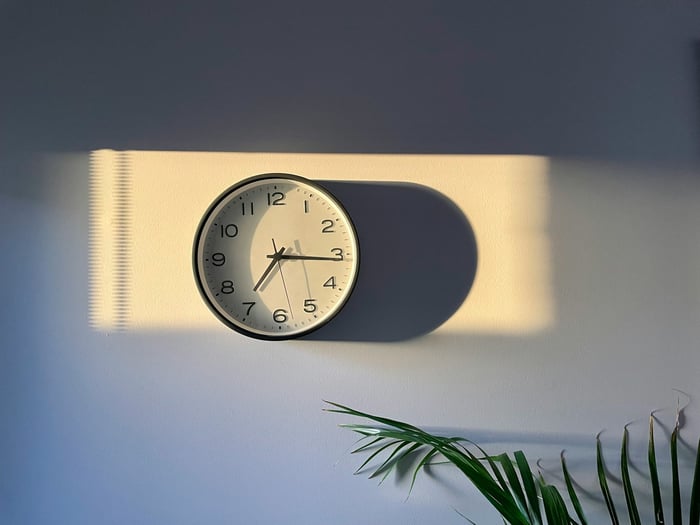
Counting down to the hour: menos
Once the clock passes the half hour, many speakers switch strategies and subtract from the next hour, the way English does with "ten to eight." The formula is next hour + menos + minutes.
Son las ocho menos diez. (It's ten to eight.)
Son las cinco menos veinte. (It's twenty to five.)
Es la una menos cuarto. (It's a quarter to one.)
This is the default in Spain. It's never wrong to use the y formula instead (son las siete y cincuenta), so if subtraction under pressure isn't your thing, you have an exit. The interesting thing is we only really use it with multiples of five. La una menos cinco is common, but la una menos siete isn't.
En punto, pasadas, and y pico
A few extra phrases make you sound much more natural:
- en punto: on the dot, sharp
- pasadas: a little after
- y pico: and a bit
- casi: almost
Son las nueve en punto. (It's nine o'clock sharp.)
Son las diez y media pasadas. (It's a little after ten thirty.)
Llegó a las dos y pico. (He arrived a little after two.)
Son casi las ocho. (It's almost eight.)
Parts of the day: de la mañana, de la tarde, de la noche
Spanish doesn't use AM and PM in conversation. To specify the part of the day, we attach a phrase with de after the time:
- de la mañana: in the morning
- de la tarde: in the afternoon or early evening
- de la noche: at night
- de la madrugada: in the early hours, before dawn
Son las siete de la mañana. (It's seven in the morning.)
La reunión es a las cuatro de la tarde. (The meeting is at four in the afternoon.)
Volvimos a las dos de la madrugada. (We got back at two in the morning.)
Keep in mind that la tarde stretches later than the English afternoon, often until eight in the evening, because dinner happens late in the Spanish-speaking world. After nine, you're usually in la noche.
There's a contrast worth memorizing: use de when you name a specific hour, and por when you don't.
Estudio a las diez y media de la mañana. (I study at ten thirty in the morning.)
Estudio por la mañana. (I study in the morning.)
Mediodía and medianoche
Noon and midnight have their own nouns: el mediodía and la medianoche.
Es mediodía. (It's noon.)
Es medianoche. (It's midnight.)
El tren sale al mediodía. (The train leaves at noon.)
La fiesta terminó a medianoche. (The party ended at midnight.)
In everyday speech, las doce del mediodía and las doce de la noche are more common.
Saying at what time something happens
So far we've answered what time is it. To ask or say when something happens, switch from es/son to the preposition a.
¿A qué hora empieza la película? (What time does the movie start?)
Empieza a las ocho y media. (It starts at eight thirty.)
Como a la una. (I have lunch at one.)
Trabajo de nueve a cinco. (I work from nine to five.)
Note the pattern in that last example: de... a... expresses a range, and the article often drops in this construction. If you're building sentences about schedules, you'll also want the days of the week and the months; our guide on how to write dates in Spanish covers those.
The 24-hour clock
Timetables, airports, official documents, and TV guides in the Spanish-speaking world use the 24-hour clock. A departure board will say 18:45, and a wedding invitation might say the ceremony starts a las 19.00 h. According to Fundéu, the recommended written forms separate hours and minutes with a colon, followed by the symbol h.
In formal spoken announcements you'll hear the numbers read directly:
El tren con destino a Sevilla saldrá a las dieciocho cuarenta y cinco. (The train to Seville will leave at eighteen forty-five.)
In normal conversation, though, people convert to the 12-hour clock: 18:45 becomes las siete menos cuarto de la tarde. Nobody invites you to dinner a las veintiuna horas. For more detail on how hours are written, the Real Academia Española has a full entry on la hora in its Diccionario panhispánico de dudas.
The numbers you need
To tell time you only need the numbers from zero to fifty-nine, and in practice a handful do most of the work:
- cinco (five)
- diez (ten)
- cuarto or quince (quarter or fifteen)
- veinte (twenty)
- veinticinco (twenty-five)
- media or treinta (half or thirty)
For the in-between minutes, remember that compounds above thirty are written as separate words: cuarenta y dos, cincuenta y siete. From thirty-one to fifty-nine you'll mostly hear them in official contexts, since casual speech rounds to the nearest five.
Putting it all together
Here's a quick practice set. Cover the answers and read the times out loud:
- 1:00: Es la una en punto.
- 3:10: Son las tres y diez.
- 5:15: Son las cinco y cuarto.
- 9:30: Son las nueve y media.
- 7:45: Son las ocho menos cuarto.
- 12:00: Es mediodía, or es medianoche, or son las doce del mediodía, or son las doce de la noche.
- 10:05 PM: Son las diez y cinco de la noche.
And a short exchange you could hear in any train station:
Perdona, ¿qué hora es? (Excuse me, what time is it?)
Son las cuatro y veinte. (It's four twenty.)
¿A qué hora sale el tren para Valencia? (What time does the train to Valencia leave?)
A las cinco menos diez. (At ten to five.)
Practice with the clocks around you. Every time you check your phone today, say the time in Spanish, first with the y formula, then with menos. Within a week the whole system will feel automatic.